Pages

Tuesday, March 4, 2025

Top 5 VPNs That Block Ads for an Enhanced Online Experience

Top 5 VPNs That Block Ads for an Enhanced Online Experience


If you’re someone who relies on ad-blocking extensions like uBlock Origin to keep your browsing experience clean, you might have encountered an annoying problem recently—uBlock Origin has stopped working on Chrome for many users. This has left many wondering how to continue blocking those pesky ads and trackers. Fortunately, there’s a solution: VPNs that also block ads. These VPNs not only provide robust privacy protection but also include built-in ad-blocking features that can replace or complement your previous ad-blocking tool. In this article, we’ll look at the top 5 VPNs that block ads, ensuring a smoother and safer online experience.

1. NordVPN

1. NordVPN

Key Features:

  • CyberSec: NordVPN comes with its proprietary feature, CyberSec, which blocks ads, trackers, and malicious websites.
  • Large Server Network: With over 5,400 servers across 59 countries, NordVPN offers excellent speeds and reliability.
  • Strong Privacy: Known for its no-logs policy, NordVPN ensures that none of your browsing data is stored or shared.
  • Multi-Platform Support: Available on multiple devices and operating systems, including Windows, macOS, Android, iOS, and Linux.

Why Choose NordVPN? NordVPN is one of the best choices for those seeking robust privacy features combined with ad-blocking capabilities. The CyberSec feature automatically blocks intrusive ads and malicious websites, ensuring a cleaner, faster, and safer online experience. Additionally, it offers advanced security protocols, making it a great all-around choice for privacy-conscious users.

2. Surfshark VPN

Key Features:

  • CleanWeb: Surfshark offers CleanWeb, an integrated feature that blocks ads, trackers, and malware.
  • Unlimited Devices: Surfshark allows users to connect an unlimited number of devices with a single account.
  • Secure and Private: Surfshark provides military-grade encryption, a no-logs policy, and support for the latest VPN protocols like WireGuard.
  • Budget-Friendly: It’s one of the most affordable premium VPNs on the market.

Why Choose Surfshark? Surfshark not only offers excellent privacy and security features, but it also makes browsing cleaner and faster with its CleanWeb ad-blocking tool. The added benefit of being able to use the VPN on an unlimited number of devices makes it an appealing option for families or multi-device users.

3. CyberGhost VPN

Key Features:

  • Ad-Blocking Features: CyberGhost includes a built-in ad blocker, designed to prevent intrusive ads, trackers, and malicious content from appearing while you browse.
  • No-Logs Policy: CyberGhost has a strict no-logs policy, ensuring your online activity is never recorded or shared.
  • Large Server Network: With over 7,000 servers in 90 countries, CyberGhost provides fast and reliable connections for users around the globe.
  • User-Friendly Interface: Known for its easy-to-use interface, CyberGhost is ideal for both beginners and advanced users alike.

Why Choose CyberGhost? CyberGhost stands out as a user-friendly VPN with built-in ad-blocking capabilities. Its focus on privacy, combined with a solid no-logs policy and a large server network, makes it an excellent choice for users seeking enhanced security and an ad-free browsing experience. The VPN also offers streaming and torrenting optimization, making it a versatile tool for multiple use cases.

4. PIA (Private Internet Access)

Key Features:

  • MACE: PIA comes with its MACE feature, which blocks ads, trackers, and malware.
  • Wide Server Network: With servers in over 78 countries, PIA offers good coverage and speed.
  • Great Customization: PIA allows users to adjust various settings, including enabling MACE for blocking ads and malware.
  • Privacy-First Approach: PIA has a proven no-logs policy, ensuring that your data remains private.

Why Choose PIA? Private Internet Access (PIA) offers robust ad-blocking features with MACE, which blocks intrusive ads and malware. It’s a great option for users who want privacy and security without sacrificing customization options. Plus, its low-cost subscription options make it a budget-friendly choice for users looking for value.

5. AdGuard VPN

Key Features:

  • Built-In Ad Blocking: AdGuard VPN is designed specifically to block ads while offering VPN protection. This makes it one of the few VPNs that prioritizes ad-blocking alongside traditional security.
  • Privacy Focused: With a no-logs policy and excellent encryption standards, AdGuard ensures that your online activity remains private.
  • Cross-Platform Support: Available on Windows, macOS, Android, and iOS.
  • No Data Collection: AdGuard VPN does not collect any user data, ensuring your anonymity.

Why Choose AdGuard VPN? AdGuard VPN is one of the best VPNs when it comes to built-in ad blocking. Its focus on eliminating ads, trackers, and even malware while protecting your privacy makes it an excellent choice for users seeking a specialized solution for an ad-free experience. If you’re tired of traditional VPNs that don’t prioritize ad blocking, AdGuard is the go-to option.


Conclusion

Ads can ruin your browsing experience, but these top 5 VPNs offer both privacy protection and ad-blocking features to improve your online activities. Whether you prioritize speed, security, or dedicated ad-blocking tools, there’s a VPN here for everyone. NordVPN and Surfshark offer comprehensive solutions, while CyberGhost provides a user-friendly option with a focus on ad-blocking. PIA and AdGuard also offer specialized features that cater to users who want to eliminate ads entirely. Choose the VPN that best suits your needs and start enjoying a cleaner, faster, and more secure online experience today!


Let us know in the comments which VPN you are using.

Monday, March 3, 2025

Top 5 Free Static Website Builders: Rated by Ease of Use

Top 5 Free Static Website Builders: Rated by Ease of Use


Creating a static website can be a fantastic way to build a simple, fast, and lightweight online presence. These websites don't require databases or complex server-side processes, which means they load quickly and are easy to maintain. If you're looking for free tools to build a static website, there are several platforms that cater to different skill levels. In this article, we'll explore five of the top free website builders, rating them based on how easy they are to use—taking into account user experience, features, and customization options.

1. Google Sites

Ease of Use: 10/10
Google Sites stands out as one of the easiest tools for building a static website. The interface is incredibly intuitive, and if you're already familiar with Google’s ecosystem (Docs, Sheets, etc.), you’ll feel right at home. You can simply drag and drop elements, and there’s no need to write any code. It’s perfect for beginners who need a basic informational site, like a portfolio, resume, or class project.

Pros:

  • Extremely easy to use with a drag-and-drop interface.
  • Seamless integration with other Google services (Drive, Calendar, Maps).
  • No coding required.
  • Fully hosted by Google.

Cons:

  • Limited customization options.
  • Not suitable for more complex websites.
  • The design templates are somewhat basic.

Best For: People who need a simple, straightforward website with minimal hassle. Google Sites is ideal for educational projects, portfolios, and internal business websites.

2. GitHub Pages

Ease of Use: 7/10
GitHub Pages is a popular choice for developers and those with coding experience. It allows you to host static websites directly from a GitHub repository, making it perfect for personal projects or technical portfolios. The platform supports HTML, CSS, and JavaScript, giving you the freedom to create a fully custom site. However, it does require some basic knowledge of Git and the command line.

Pros:

  • Fully customizable (perfect for developers).
  • Free hosting with no ads.
  • Supports custom domains.
  • Integrates well with version control (Git).

Cons:

  • Requires coding knowledge.
  • A bit of a learning curve, especially for beginners.
  • No built-in design tools (you have to create everything from scratch).

Best For: Developers and those familiar with coding who want full control over their site’s design and functionality.

3. Netlify

Ease of Use: 8/10
Netlify is a platform designed to make static website deployment seamless. It supports modern web technologies like JAMstack and offers powerful features like continuous deployment, serverless functions, and form handling. For those who prefer to use a site generator (like Jekyll or Hugo), Netlify integrates smoothly with these tools. While it’s easy to get started, it does require basic technical knowledge, especially if you're using static site generators.

Pros:

  • Free hosting with built-in continuous deployment.
  • Great integration with GitHub, GitLab, and Bitbucket.
  • Excellent for JAMstack sites.
  • Custom domains and SSL support.

Cons:

  • Requires knowledge of Git and modern web technologies.
  • Can be overwhelming for complete beginners.

Best For: Developers who want a simple, fast platform to deploy their static sites with advanced features.

4. Carrd

Ease of Use: 9/10
Carrd is a fantastic platform for building one-page websites. It’s super beginner-friendly with a drag-and-drop builder, making it an excellent choice for those who want a professional-looking site without any coding. The free plan gives you access to basic features, and the templates are modern and responsive. Carrd is great for personal portfolios, landing pages, or simple business sites.

Pros:

  • Simple drag-and-drop interface.
  • Beautiful, modern templates.
  • Mobile-friendly designs.
  • Free plan includes basic hosting.

Cons:

  • Limited to one-page sites unless you upgrade.
  • Customization options are somewhat limited without a paid plan.

Best For: Individuals and businesses that need a one-page website, such as portfolios, landing pages, or personal blogs.

5. Webflow

Ease of Use: 8/10
Webflow is an excellent option for users who want to create visually stunning websites without needing to know how to code. The platform offers a drag-and-drop interface, much like Google Sites and Carrd, but it provides far more advanced design options, making it suitable for users with more design aspirations. Webflow allows for pixel-perfect design, and it gives you the ability to build complex animations and interactions—perfect for users who want a high level of customization without having to write code.

Pros:

  • Powerful visual design tools with pixel-perfect precision.
  • No-code interface with drag-and-drop functionality.
  • Excellent for advanced animations and interactions.
  • Customizable with the ability to export clean HTML/CSS code if needed.
  • Offers hosting with the free plan, though custom domains require an upgrade.

Cons:

  • The learning curve can be steep if you want to unlock all the design capabilities.
  • Limited features on the free plan (such as custom domain support).
  • Free plan includes Webflow branding on the site.

Best For: Designers or businesses who want a high level of customization, intricate animations, and a unique look without needing to code. It’s perfect for portfolios, agency websites, or creative projects.


Conclusion

When you’re looking for a free static website builder, Google Sites remains the easiest tool for absolute beginners, providing a simple drag-and-drop interface and seamless integration with Google’s services. For more advanced users, GitHub Pages and Netlify offer customization and deployment flexibility, especially for developers. If you're after powerful design capabilities without coding, Webflow shines as the best alternative to WordPress, offering high-level design control with its intuitive visual interface.

Each platform has its strengths, and the best one for you will depend on your skill level and the complexity of the website you’re aiming to create. Which one are you using? Let us know in the comments.

The Best Free Software Alternatives to Paid Programs in 2025

The Best Free Software Alternatives to Paid Programs in 2025


In today’s world, software subscriptions and high upfront costs can add up quickly. If you’re tired of paying for expensive programs, you’re not alone. Fortunately, free and open-source alternatives have become powerful enough to compete with premium software. Whether you need an office suite, photo editor, or project management tool, there are fantastic zero-cost solutions available.

Let’s explore the best free software alternatives to popular paid programs in 2025.


1. Microsoft Office vs. LibreOffice / OnlyOffice

Best for: Documents, Spreadsheets, Presentations

  • Paid Option: Microsoft Office (Subscription-based: $69.99+/year)
  • Free Alternative: LibreOffice (Open-source) or OnlyOffice

Why Choose LibreOffice/OnlyOffice?
✅ Fully compatible with Word, Excel, and PowerPoint files
✅ No subscription fees or online account required
✅ Works on Windows, macOS, and Linux

🔹 Best for: Individuals or businesses who don’t need real-time cloud collaboration but want a full-featured offline office suite.


2. Adobe Photoshop vs. GIMP / Photopea

Best for: Image Editing & Graphic Design

  • Paid Option: Adobe Photoshop (Subscription-based: $20.99/month)
  • Free Alternative: GIMP (Desktop) or Photopea (Web-based)

Why Choose GIMP/Photopea?
✅ Supports Photoshop’s PSD files
✅ Offers advanced layers, brushes, and filters
✅ No subscription or login required

🔹 Best for: Designers, photographers, and casual users who need Photoshop-like features for free.


3. Adobe Premiere Pro vs. DaVinci Resolve / Shotcut

Best for: Video Editing

  • Paid Option: Adobe Premiere Pro ($22.99/month)
  • Free Alternative: DaVinci Resolve (Professional) or Shotcut (Beginner-friendly)

Why Choose DaVinci Resolve/Shotcut?
✅ DaVinci Resolve offers Hollywood-level editing & color grading for free
✅ Shotcut is great for beginners who need basic video editing
✅ No watermarks or feature limitations

🔹 Best for: Content creators and filmmakers looking for powerful, free video editing tools.


4. Evernote vs. Joplin / Obsidian

Best for: Note-Taking & Productivity

  • Paid Option: Evernote (Subscription-based: $10.83/month for full features)
  • Free Alternative: Joplin (Open-source) or Obsidian (Markdown-based)

Why Choose Joplin/Obsidian?
Joplin syncs notes securely without storing them on third-party servers
Obsidian is great for knowledge management with a unique graph view
✅ No ads or account restrictions

🔹 Best for: People who want private, distraction-free note-taking without paying for Evernote’s premium features.


5. Slack vs. Discord / Mattermost

Best for: Team Communication & Collaboration

  • Paid Option: Slack (Subscription-based: $8.75/user/month)
  • Free Alternative: Discord (For casual teams) or Mattermost (For businesses)

Why Choose Discord/Mattermost?
Discord offers free voice, video, and chat for unlimited members
Mattermost is a Slack alternative designed for businesses & self-hosting
✅ No user limits or message history restrictions (unlike Slack’s free version)

🔹 Best for: Teams that want real-time communication without paying for Slack.


6. Trello vs. Notion / ClickUp

Best for: Project Management

  • Paid Option: Trello (Subscription-based: $5+/user/month for full features)
  • Free Alternative: Notion (All-in-one workspace) or ClickUp (Agile & task management)

Why Choose Notion/ClickUp?
Notion combines task management with wikis and document collaboration
ClickUp offers Kanban boards, Gantt charts, and goal tracking for free
✅ More features than Trello’s free plan

🔹 Best for: Individuals and teams looking for a powerful, all-in-one project management tool.


7. Zoom vs. Jitsi Meet / Google Meet

Best for: Video Calls & Meetings

  • Paid Option: Zoom (Subscription-based: $14.99/month for longer meetings)
  • Free Alternative: Jitsi Meet (Self-hosted) or Google Meet (Free plan with limits)

Why Choose Jitsi Meet/Google Meet?
Jitsi Meet allows unlimited meetings with no account required
Google Meet is integrated with Gmail and Google Calendar
✅ No 40-minute time limit like Zoom’s free plan

🔹 Best for: Teams that need free and unlimited video conferencing.


Final Thoughts: Is Free Software Worth It?

Free software has come a long way, and in many cases, it matches or even surpasses paid alternatives. If you’re looking to save money without sacrificing features, these tools are excellent replacements for expensive subscriptions.

For Office Work: LibreOffice, OnlyOffice
For Creatives: GIMP, DaVinci Resolve
For Teams & Productivity: Notion, Discord, ClickUp
For Meetings: Jitsi Meet, Google Meet

Before committing to expensive software, try these free alternatives—you might find they meet all your needs!


Would you like me to add more comparisons or expand on a specific tool? 🚀

Sunday, March 2, 2025

Top 5 Cloud Storage Providers with the Largest Free Storage in 2025


For those looking for the most free cloud storage without worrying too much about security, privacy, or extra features, this list highlights the top five providers that offer the biggest free storage capacities as of 2025.

1. TeraBox – 1 TB Free Storage

  • Free Storage: 1 TB (1,024 GB)
  • Why Choose It?: If sheer storage space is your top priority, TeraBox offers the most free space—by far. You can store thousands of photos, videos, and files without spending a dime.
  • Downsides: Some concerns about security and privacy, but if space is all you need, it’s unbeatable.

2. MEGA – 20 GB Free Storage

  • Free Storage: 20 GB (can increase via bonuses)
  • Why Choose It?: MEGA gives you a solid amount of free space and has been around for years. It used to give you 50 GB free storage but it has been downgraded.
  • Downsides: While it promotes security, this list focuses on max storage, not privacy.

3. Google Drive – 15 GB Free Storage

  • Free Storage: 15 GB (shared across Google services)
  • Why Choose It?: Google Drive is well-integrated with Android, Gmail, and Google Docs, making it a good all-around option.
  • Downsides: The 15 GB is shared between Gmail, Google Photos, and Drive, so it can fill up quickly.

4. Filen – Up to 50 GB Free Storage

  • Free Storage: 10 GB (expandable to 50 GB via referrals)
  • Why Choose It?: If you’re willing to refer friends, you can increase your free storage up to 50 GB.
  • Downsides: You start with only 10 GB, so you’ll need to invite others to get the full 50 GB.

5. pCloud – 10 GB Free Storage

  • Free Storage: 10 GB
  • Why Choose It?: Reliable and easy to use, with some ways to increase your storage through bonuses.
  • Downsides: Not the biggest free offer, but still a good long-term option.

Conlusion

If your main goal is getting the most free cloud storage possible, then TeraBox (1 TB) is the clear winner. However, if you prefer a more well-known option, MEGA and Google Drive are great choices.

This list does not focus on security, privacy, or extra features, so if those are concerns, you might need to look elsewhere. But if all you care about is getting the most free storage—these are your best bets!

Krisspy: Revolutionizing App Design with AI(Deal)


Turn Ideas into Production-Ready Designs in Minutes

What is Krisspy?

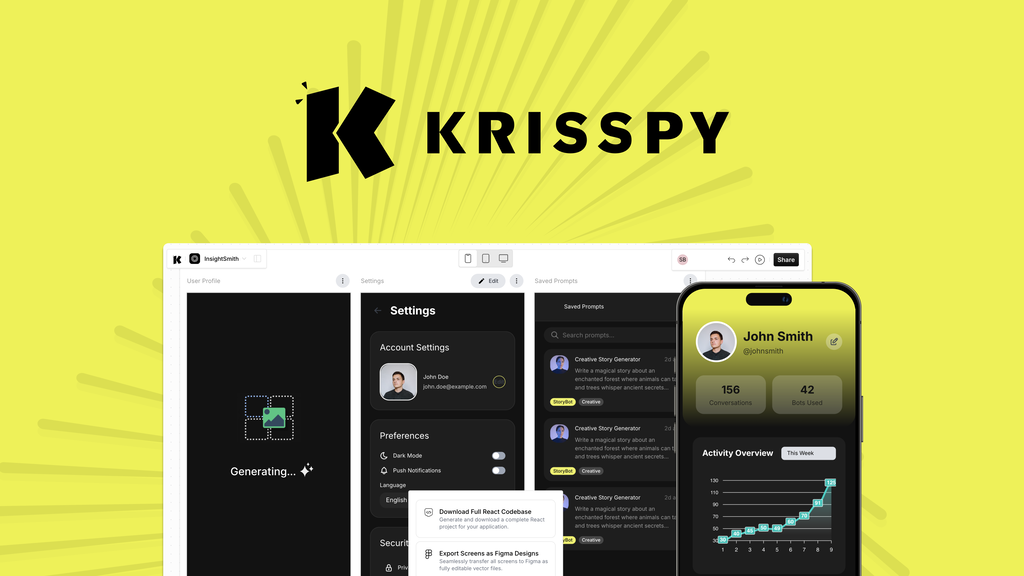
Designing and launching a functional interface for your app can be time-consuming and requires a lot of coordination among team members. But with Krisspy, an AI-powered platform, you can turn your app ideas into live, high-fidelity prototypes in just minutes—no coding or design expertise needed.

Key Features

  • AI-Generated Prototypes: Skip weeks of design work and create full app prototypes in minutes using AI.

  • Real-Time Adjustments: Modify designs easily with a user-friendly visual editor or iterate using AI.

  • Figma Integration: Maintain design consistency by importing existing Figma assets.

  • Built-In Documentation: Automatically generate all documentation, including user stories and sitemaps.

Who Is It For?

Krisspy is ideal for freelancers, product managers, and small businesses looking to streamline their product design process. Its features include GDPR compliance, white labeling, and seamless Figma integration.

Plans and Pricing

Krisspy offers a lifetime deal with various pricing tiers. Each plan includes lifetime access, credits per month, unlimited applications, smart prototype features, and more.

  • Tier 1: $119

  • Tier 2: $239

  • Tier 3: $480

Each tier comes with a 60-day money-back guarantee, ensuring you can try out the platform risk-free.

Conclusion

Krisspy is an innovative platform that leverages AI to simplify and accelerate the app design process. With its ability to generate high-fidelity prototypes, real-time adjustments, and seamless Figma integration, Krisspy is poised to revolutionize the way apps are designed and launched.

Top 5 VPNs That Block Ads for an Enhanced Online Experience

Top 5 VPNs That Block Ads for an Enhanced Online Experience If you’re someone who relies on ad-blocking extensions like uBlock Origin to ...